
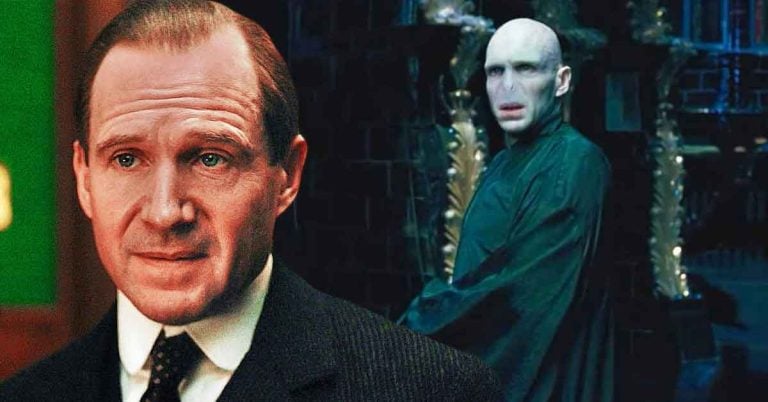
When Ralph Fiennes walked into the audition room for Schindler’s List in 1992, no one expected what would happen next — least of all Steven Spielberg. Fiennes, then a quiet British stage actor known for Shakespeare, carried no trace of menace. He was soft-spoken, polite, and precise. But when he began reading as Nazi commandant Amon Goeth, something shifted. His breathing slowed, his eyes turned cold, and the room seemed to shrink around him. Spielberg sat frozen. When the scene ended, he didn’t applaud — he simply walked out. Moments later, he returned, pale and shaken, and said quietly,
“I think I’ve just met evil.”
Fiennes didn’t even want the part. “I was afraid of him,” he admitted years later. “I didn’t want to live in that man’s head.” But Spielberg saw something in him — a stillness that could become terror. So Fiennes agreed, not out of ambition, but curiosity. “I wanted to understand how a human being could become so hollow.”
The transformation was brutal. He wore Goeth’s uniform even off-camera, not out of ego, but because “I needed to feel his weight, his ugliness.” Crew members avoided him. Survivors visiting the set couldn’t meet his eyes. One woman burst into tears. When Fiennes tried to comfort her, she said, trembling, “It’s not you… it’s him. You look like him.”
When the film premiered, his performance was hailed as haunting and unforgettable. But it left scars. “I was disgusted by how easy cruelty can look,” Fiennes said. “That stayed in me for years.”
Hollywood tried to label him — the new sophisticated villain, the cold-eyed charmer. But Fiennes refused to be boxed in. “I don’t want to be understood,” he said. “Mystery is the only power an actor has left.” So he went from monsters to lovers, priests, poets, and spies. From the broken soul in The English Patient to the unhinged killer in Red Dragon.
Then came Harry Potter. At first, he laughed at the idea of playing Lord Voldemort. “I don’t do fantasy,” he said. But his sister’s children begged him. He accepted only when he found a way to make the character real. “I didn’t want him to be a cartoon. I wanted him to feel like death had learned to walk.” He studied cobras to shape Voldemort’s eerie grace, breathing so quietly that his voice became “like air leaking through glass.” Daniel Radcliffe once said, “When Ralph walked on set, you didn’t need special effects
— the room just froze.”
Behind that darkness, though, is a man of silence. He writes poetry, avoids fame, doesn’t own a smartphone. “Fame is noise,” he says. “I like silence.” During The Constant Gardener, he refused a stunt double. “If there’s no risk, there’s no truth.”
In the end, Ralph Fiennes doesn’t just play villains. He plays the fragile line between humanity and horror — the calm voice before the scream, the quiet man who reminds us that evil isn’t loud. It’s patient. It’s human. And perhaps that’s why he unnerves us so deeply — because when he looks into the camera, it feels like he already knows the darkest part of us.
#fblifestyle